




Nature Communications has published a paper entitled ‘500-year paleoclimate record inferred from Greenland Juniper wood contextualises current climate warming’. It was prepared by an international team of researchers led by Dr Magdalena Opała-Owczarek, a professor at the University of Silesia. The article presents a reconstruction of summer temperature variability in southern Greenland over the past 500 years, based on annual growth rings of juniper wood from Greenland.
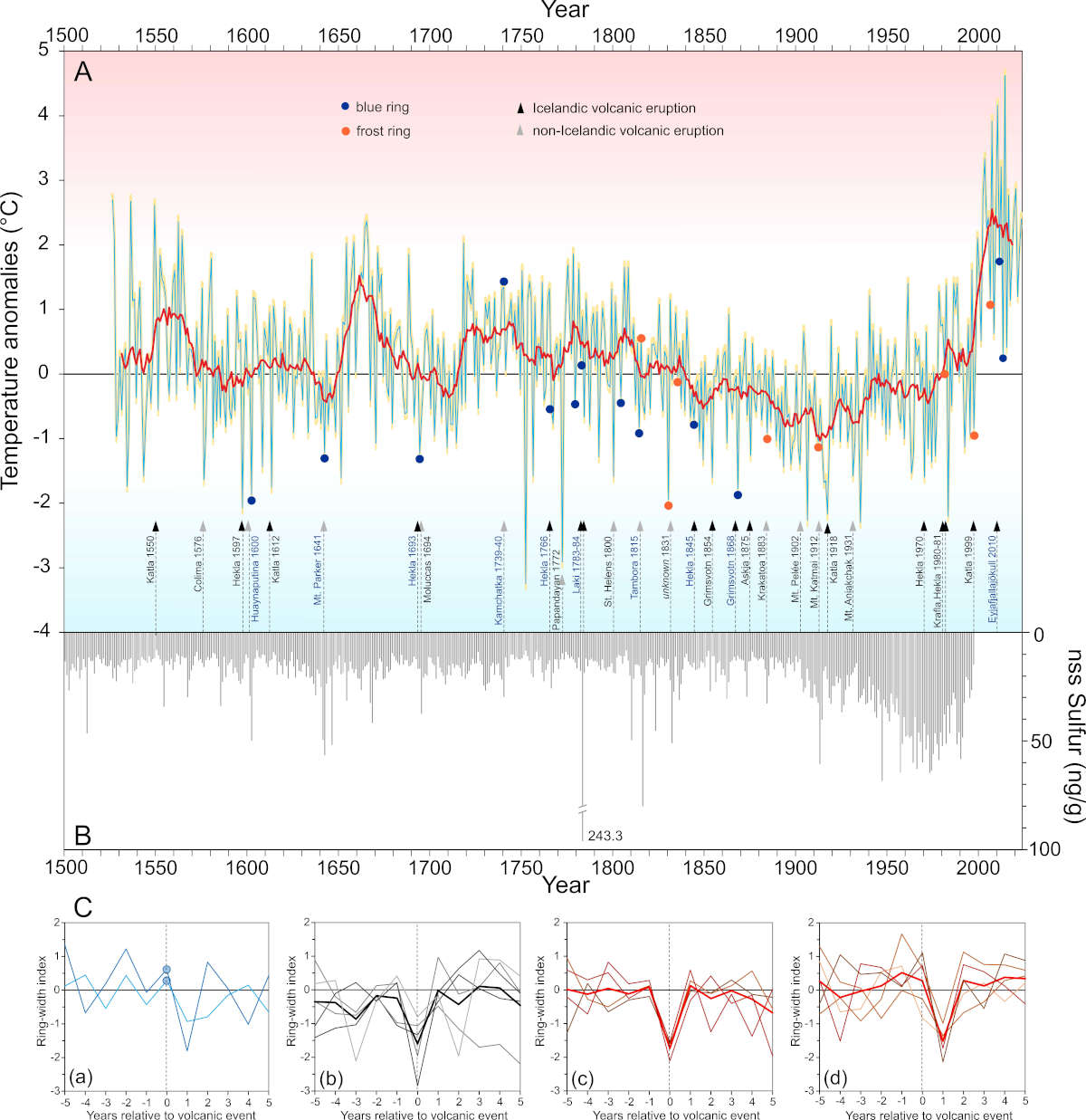
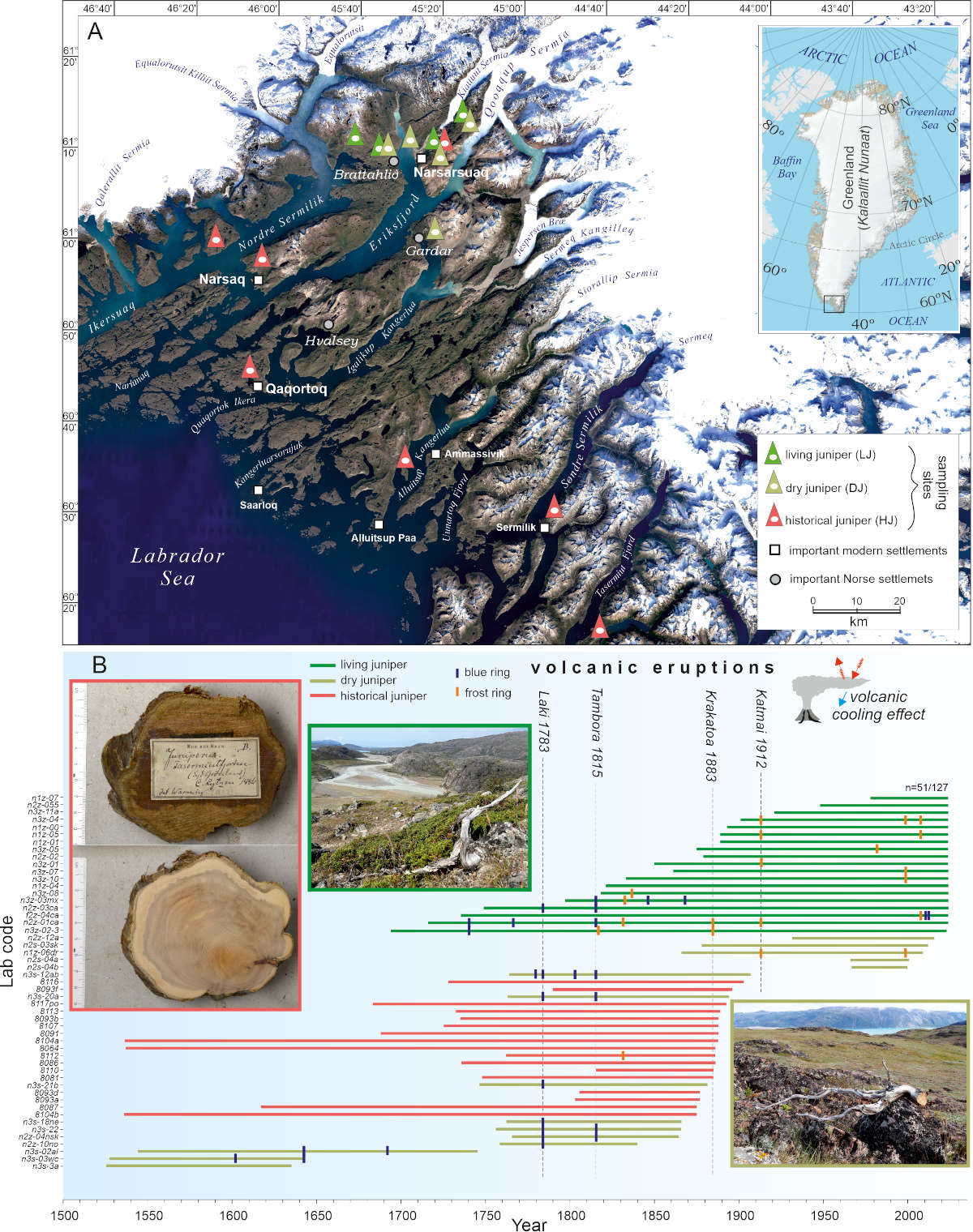
Juniper shrubs (Juniperus communis) that grow in the harsh conditions of southern Greenland react strongly to summer temperatures. By analysing the width of their annual rings and the microscopic structure of the wood, it has been possible to reconstruct summer temperatures from the 16th century to the present day. This dendrochronological reconstruction is one of the longest in the entire Arctic region. Traces of extreme cooling associated with major volcanic eruptions, including those of Laki in 1783 and Tambora in 1815, have been identified in the collected material. Traditional oral accounts of ‘the year without a summer’ in Inuit history are manifestations of the collective memory of the extreme cooling that followed these eruptions. For the first time in the Arctic, a dendrochronological record of these events has been found. This was made possible by the discovery of so-called blue rings, which are biological ‘scars’ that form during sudden drops in temperature during the summer.
The novelty of the research was also related to the use of two types of material: living junipers and historical wood. The wood came from herbaria and museums, where it had been deposited by participants of historical Arctic expeditions. Thanks to museum-based research, the sites where former expeditions had conducted research could be located and samples could be re-collected for analysis. Thanks to this, the constructed dendrochronological record is robust and will serve as a reference for other analyses of this type conducted beyond the northern treeline. The most significant finding of the research is that the last few decades have been the warmest period in the last five centuries, and that contemporary warming is an unprecedented phenomenon that clearly exceeds natural climate variability.
The research was conducted as part of the NCN Sonata project entitled Reconstruction of climatic conditions in the Arctic before the period of instrumental measurements on the basis of dendrochronological analysis of tundra dwarf shrubs and historical botanical collections. Work on the publication was carried out during an internship at the University of Cambridge, thanks to the support of the Research Excellence Initiative of the University of Silesia in Katowice – Priority Research Areas POB3.
Source: Opała-Owczarek, M., Büntgen, U., Owczarek, P., Lange, Ch., 2025. 500-year paleoclimate record inferred from Greenland Juniper wood contextualizes current climate warming. Nature Communications 16, 11665. https://doi.org/10.1038/s41467-025-66842-1