




We are pleased to invite you to the Institute of Earth Sciences seminar, which will take place on May 12, 2026 (Tuesday) at 13:00 in room 002.
Our guest speaker will be
Associate Prof. Sebastian Breitenbach (Northumbria University) – Head of the NICEST laboratory (Northumbria Isotope and Clumped Geothermometry for Environmental Studies) and a palaeoclimatologist specializing in cave environments and carbonate geochemistry. His research focuses on reconstructing past environmental and climate conditions using geochemical and isotope-based methods. He takes an interdisciplinary approach, collaborating with archaeologists, anthropologists, and physicists, and conducts research projects worldwide, including Europe, Asia, and New Zealand.
He will deliver a lecture entitled:
“Deep Into the Continent and Back in Time — Where No One Has Gone Before”
ABSTRACT:
Continental Eurasia, with its vast permafrost deposits, boreal forests and dryland biomes, is a key regulator of global greenhouse gas dynamics and atmospheric circulation patterns. Despite its rapid response to global warming, reflected in accelerating permafrost thaw, intensifying wildfires, and increasing number of extreme events like droughts and floods, the environmental history of continental Eurasia remains poorly understood, due largely to availability of suitable archives.
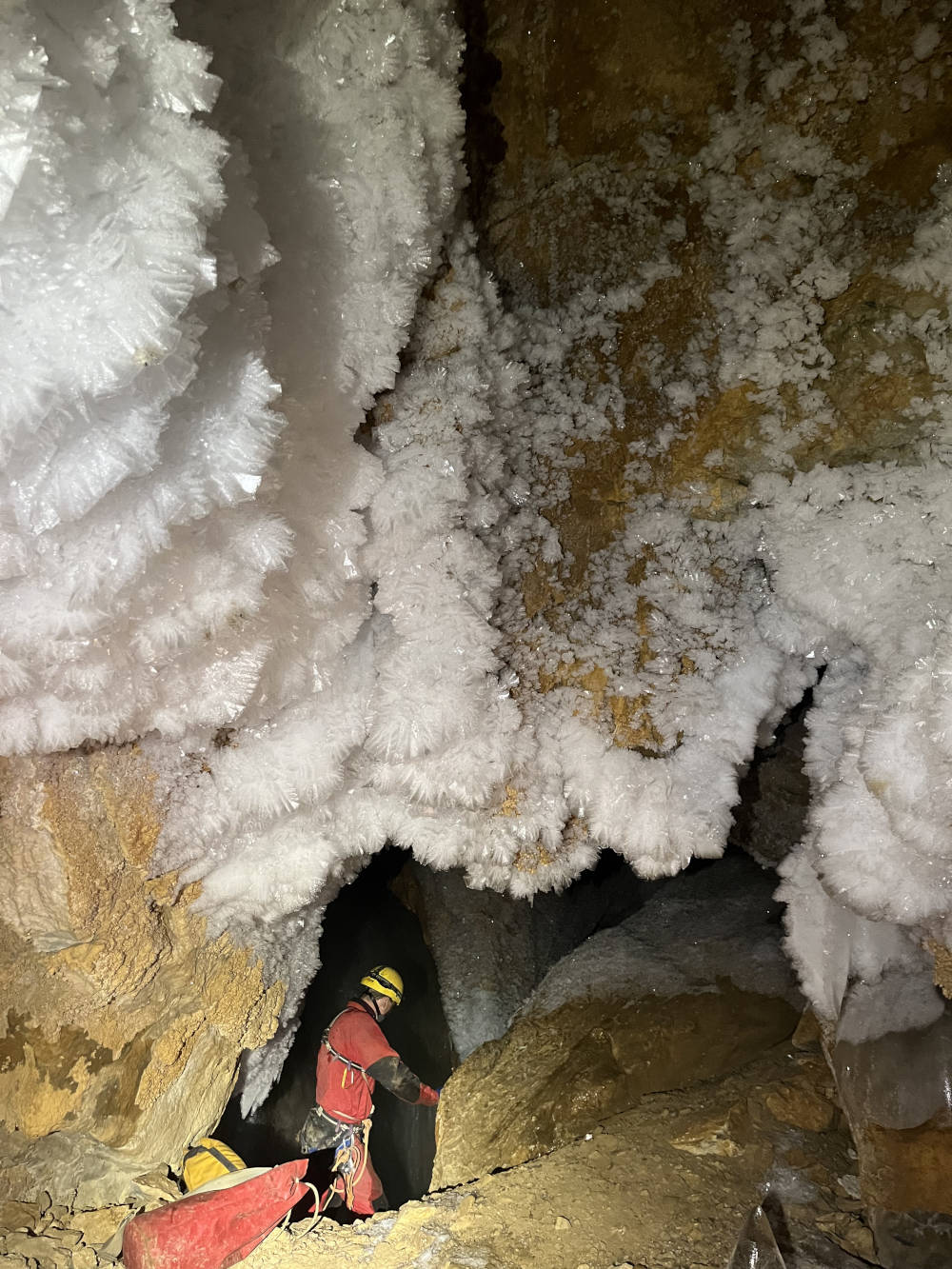
I will introduce cave deposits as key archives for continental palaeoenvironmental changes. I will present some results of my team’s work and discuss opportunities and challenges when working with speleothems in permafrost regions. Ongoing work reveals a rich history of environmental changes in Siberia and Mongolia since the Miocene. Using innovative analytical tools like clumped isotopes and organic geochemistry we gain fresh insights into past temperature, vegetation changes and moisture supply that are intimately linked to circulation dynamics. Going ca. 6 million years back in time, we can start to tap into continental climate changes in a warmer-than-modern world, but we also face new challenges that require novel methods and interdisciplinary collaboration. Linking multiproxy reconstructions with model output we should be able to estimate possible near-future scenarios for permafrost, precipitation, and vegetation changes deep in Eurasia and associated repercussions for society.