





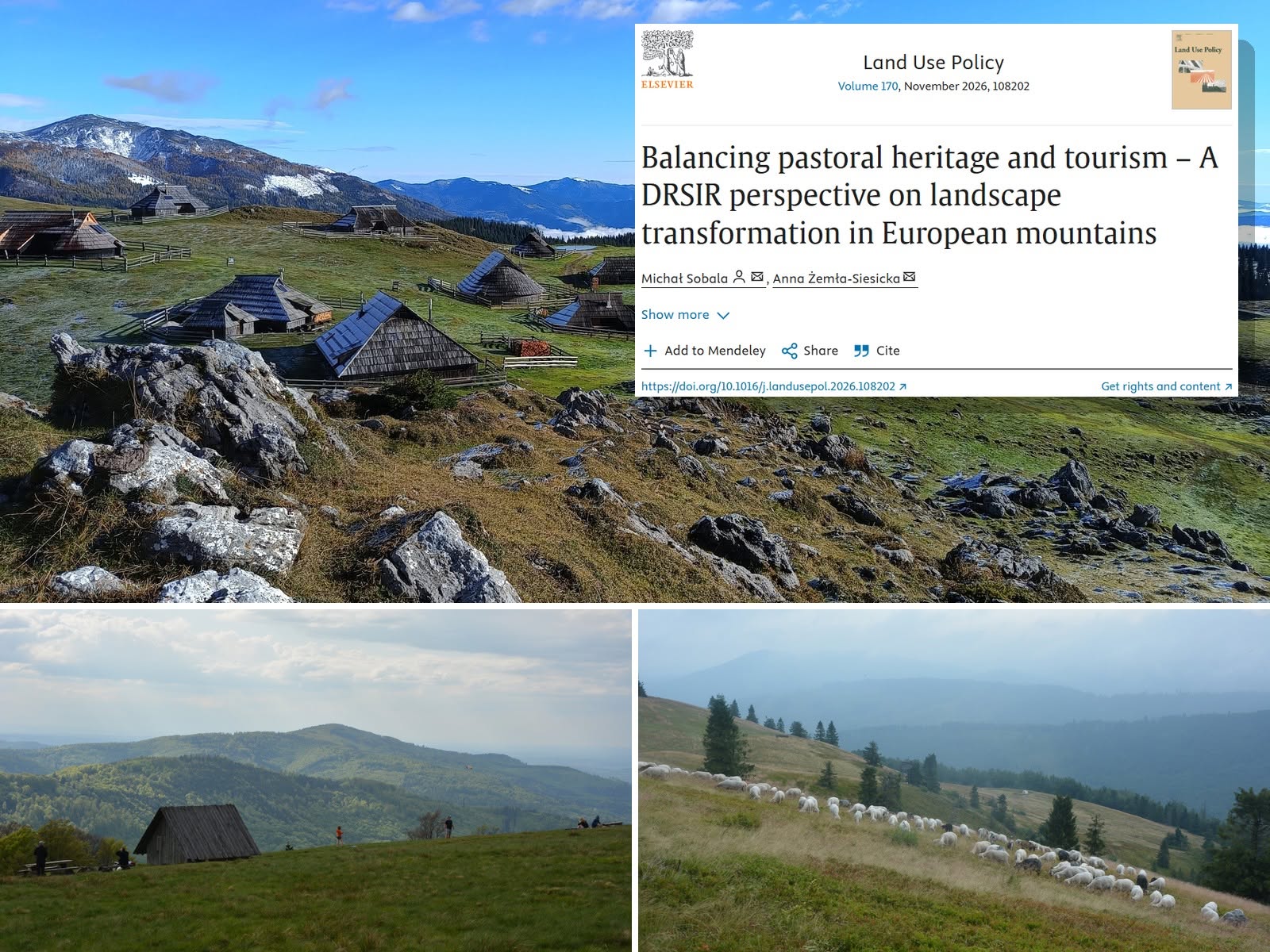
Europe’s traditional mountain landscapes have been undergoing profound transformations for decades as a result of the decline of pastoralism and the expansion of tourism. In an article published in Land Use Policy, Michał Sobala and Anna Żemła-Siesicka from the Landscape Research Group propose a new approach to understanding these changes by applying a modified DPSIR framework (DRSIR) to landscape analysis. The authors identify three models of relationships between pastoralism and tourism: Co-presence, Sequence, and Abandonment. These models provide a structured framework for understanding landscape transformations in European mountains and may support spatial planning, landscape conservation, and decision-making related to tourism development and the preservation of pastoral heritage.
Sobala, M., & Żemła-Siesicka, A. (2026). Balancing pastoral heritage and tourism – A DRSIR perspective on landscape transformation in European mountains. Land Use Policy, 170, 108202.
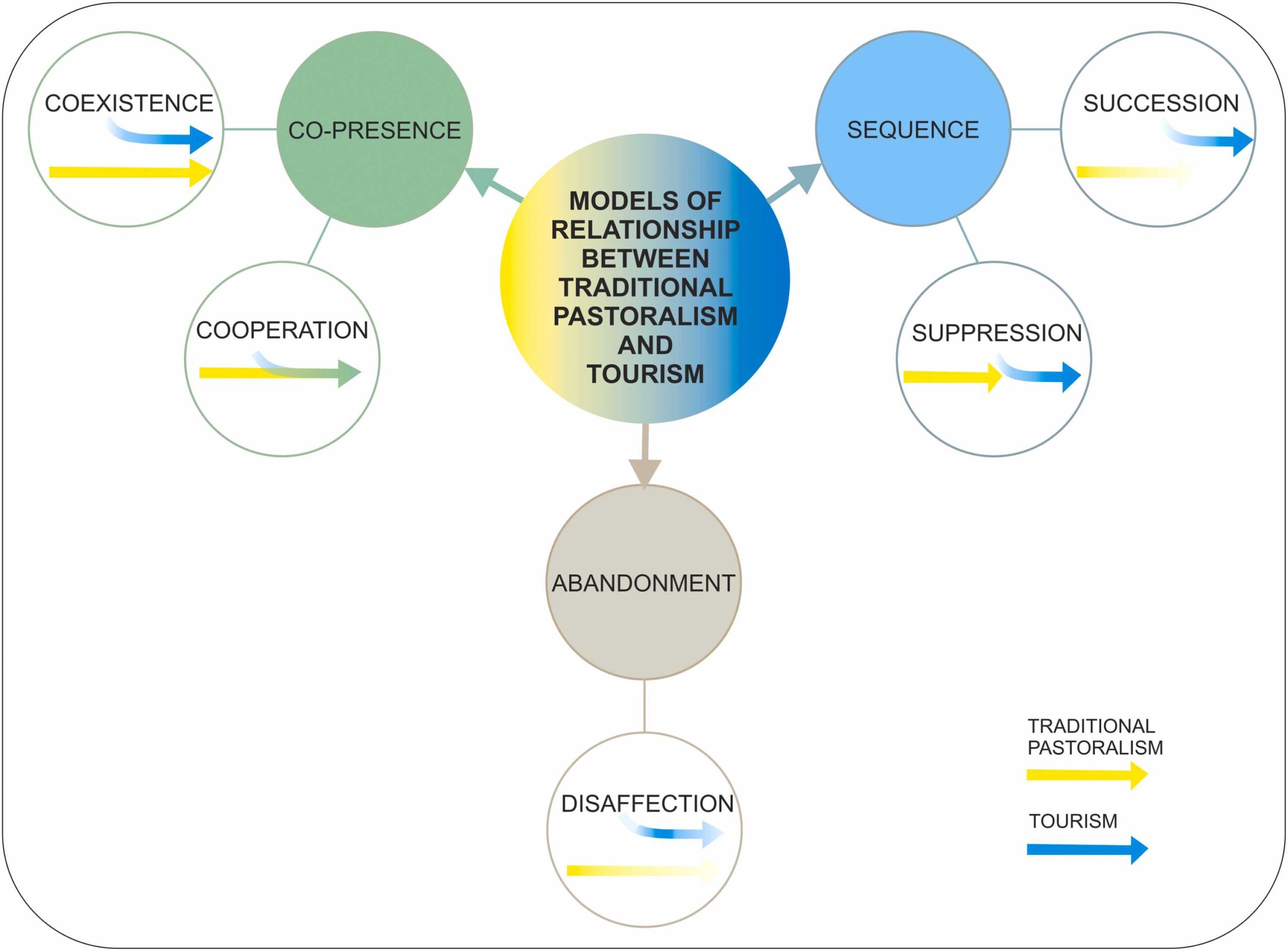
Models of relationships between traditional pastoralism and tourism in mountain areas.