




The selection of materials for tribologically interacting components should be based on tests performed under conditions that most closely resemble real-world conditions, so the friction pair should most accurately represent the actual pairing.
The laboratory conducts tests on the tribological properties of sliding materials in reciprocating, rotary, or cyclic motion under dry friction conditions or with continuous and intermittent lubrication (oil mist). Tests can be conducted at constant ambient temperature and constant air humidity, which is crucial for friction pairings. The measurement results provide information on the friction force, coefficient of friction, and linear wear of the friction pair. To further enhance the information about the tested pairing, it is possible to analyze the interface and wear products using an optical microscope and an analytical balance
Laboratory equipment:
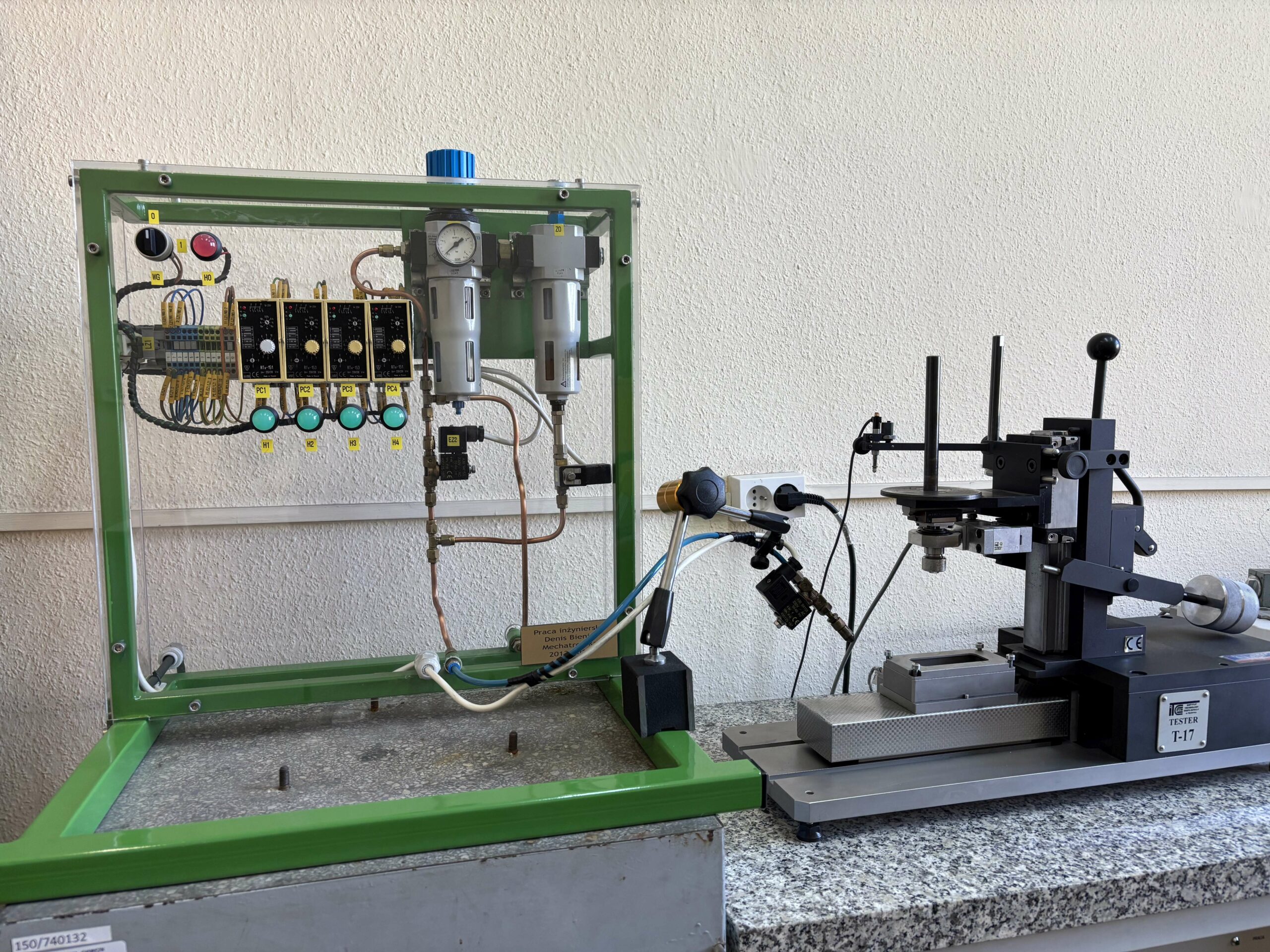
- The T-17 pin-on-plate tribological tester is designed to test the tribological characteristics of sliding material assemblies in reciprocating motion, with particular emphasis on materials intended for use in kinematic engineering systems and for human joint prosthetic components, e.g., polymers. The T-17 device enables testing to be conducted in accordance with the requirements of the ASTM F 732 standard. The test assembly consists of a stationary pin pressed with a force P against a plate performing a reciprocating motion at a predetermined frequency and amplitude.
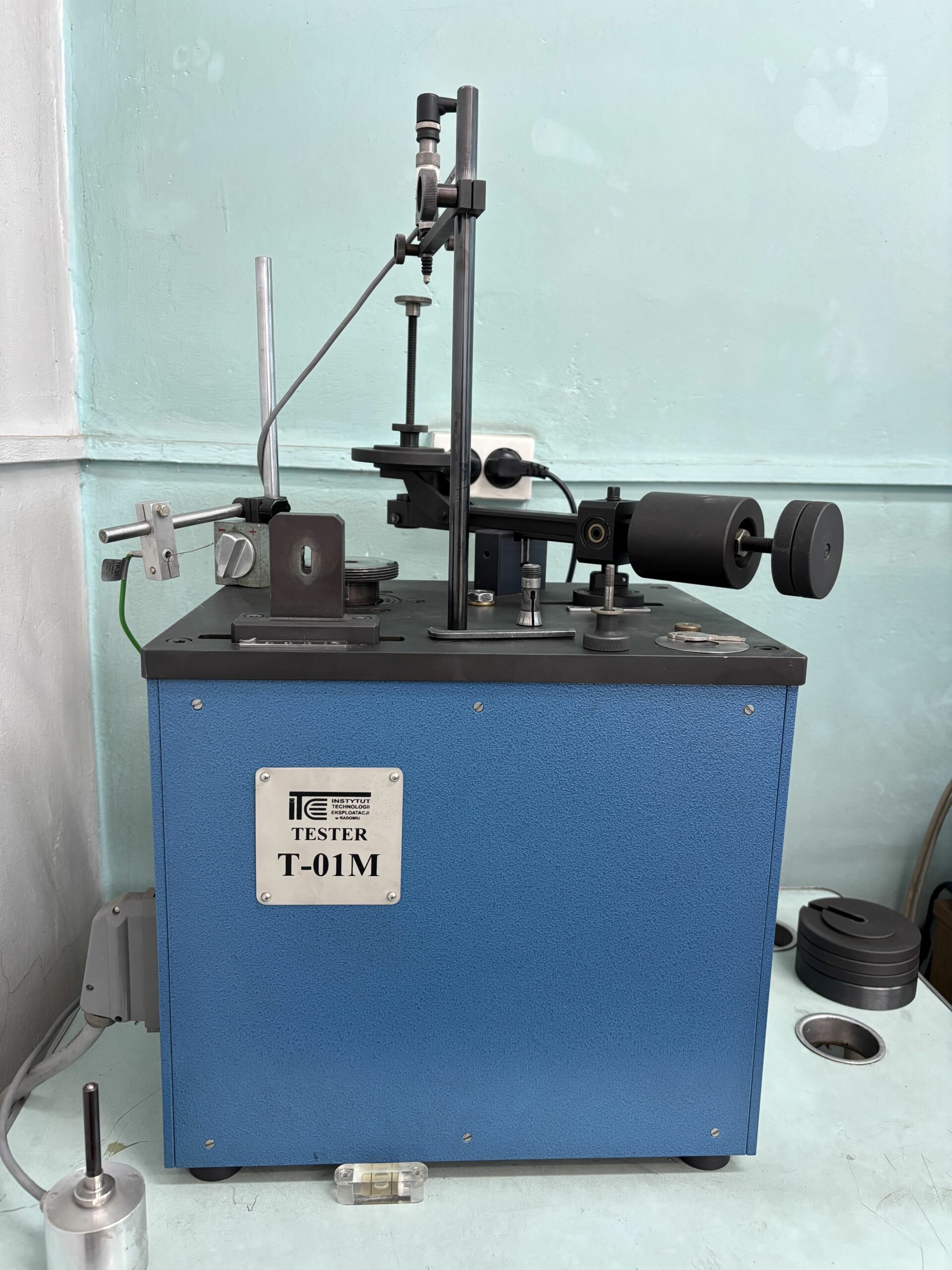
- The T-01M pin/ball-on-disc tribological tester is designed to evaluate the tribological properties of materials used in friction-sensitive machine and device components. The T-01M can be used to determine the wear resistance and coefficient of friction of a material in sliding contact, depending on sliding speed, surface pressure, presence and type of lubricant, contamination, and other factors. The T-01M tester allows for testing in accordance with the methods specified in ASTM G99 and DIN 50324 standards.
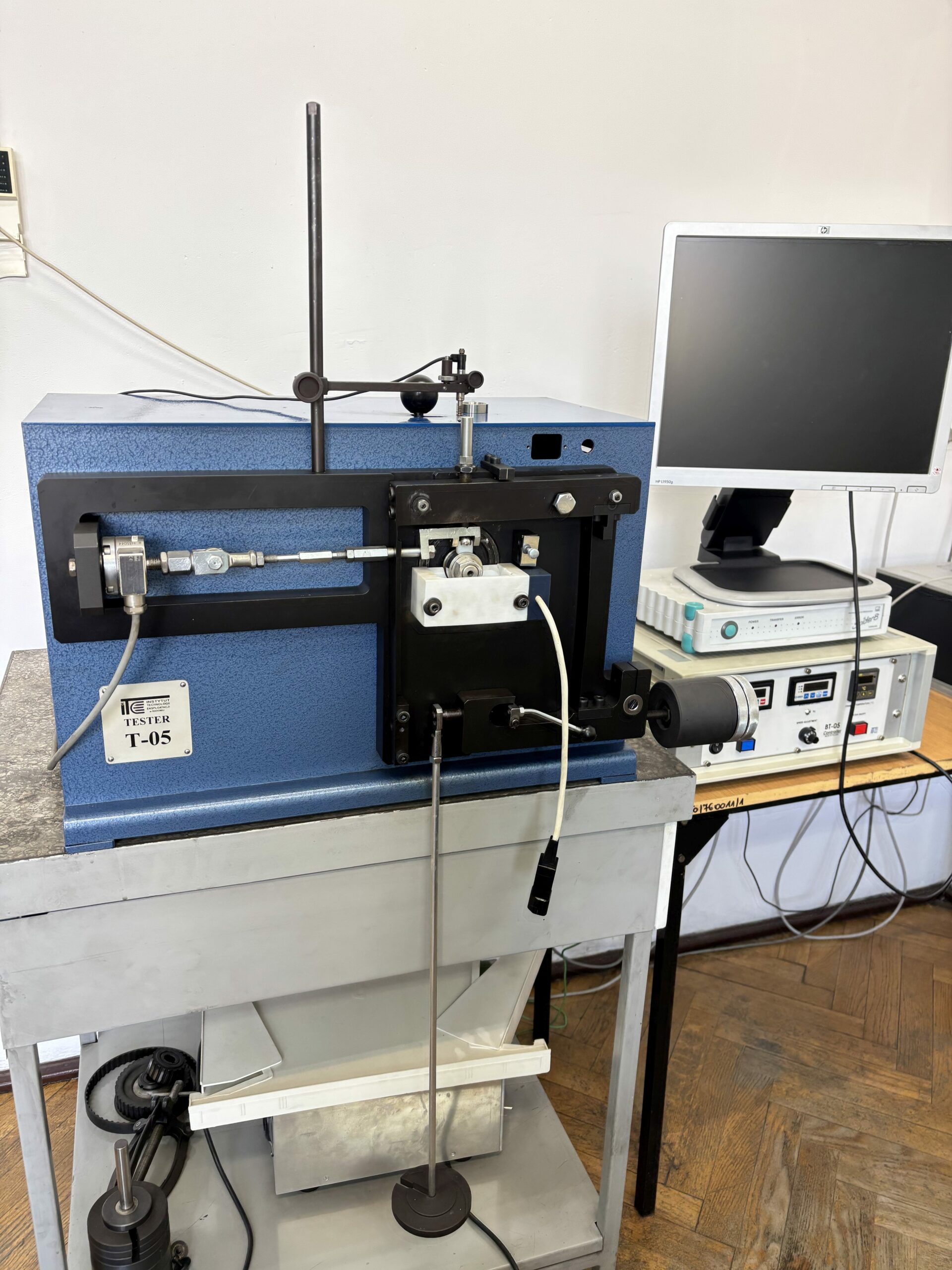
- The T05 roller-on-block tribological tester is designed to test the wear resistance of metals and plastics during friction, to test the scuffing resistance of low-friction coatings applied to highly loaded machine components, and to determine the properties of oils and greases. The T-05 tester allows for testing in accordance with the methods specified in the ASTM D 2714, D 3704, D 2981, and G 77 standards. The test system consists of a stationary sample in the form of a block pressed against a rotating roller with a force P, creating linear or distributed contact. The test is performed directionally or oscillating (frequency and amplitude).
- The automatic lubrication station allows the lubrication system (oil mist lubrication) to cooperate with any tribological testers.
- Saphir sanding and polishing machine.
- Compulab controller with peristaltic pump.
- Fisherscope coatings thickness gauge.
- IS1 ultrasonic cleaner.
- Water bath LW102M.
- WGA-60G analytical balance.
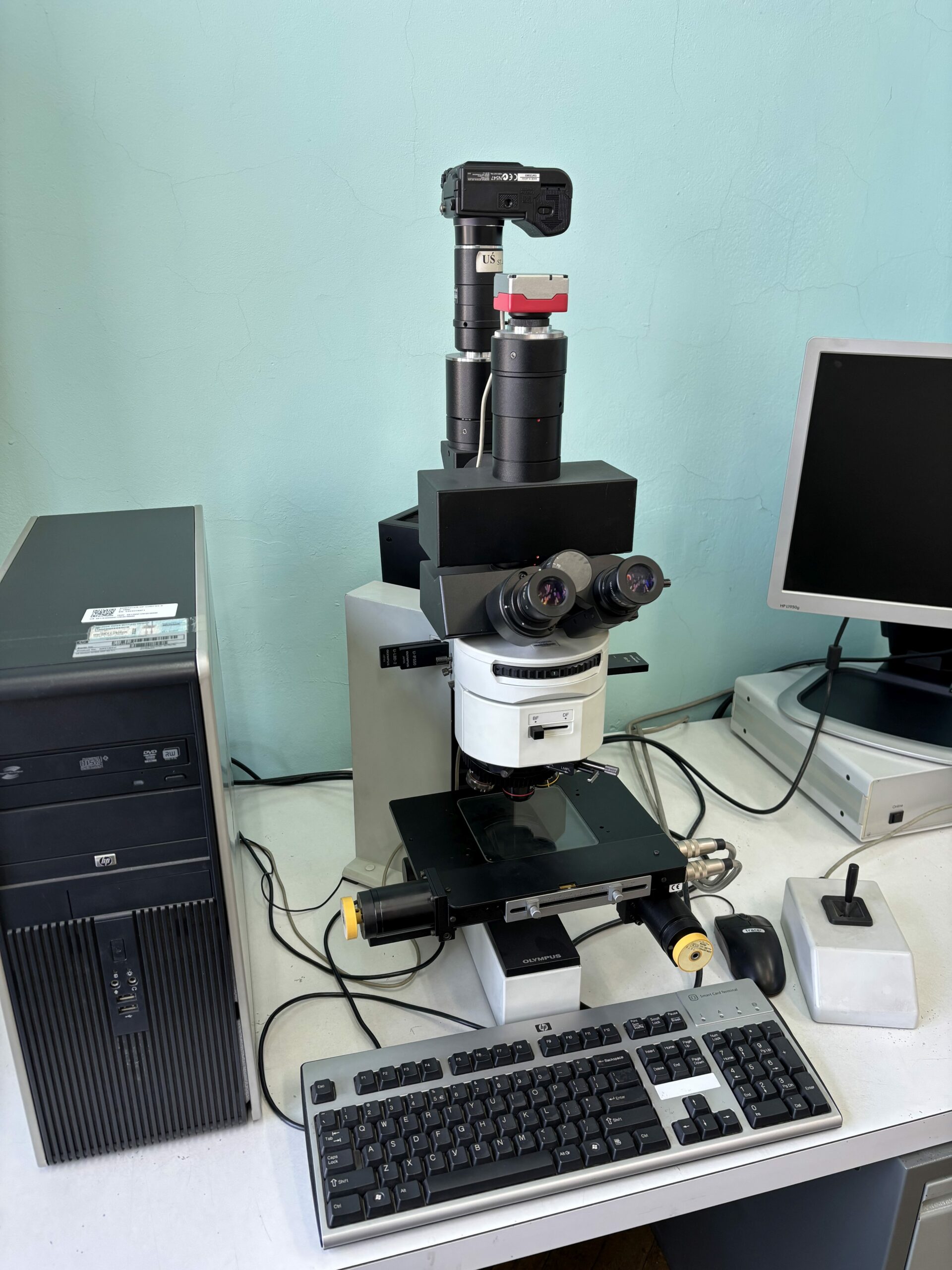
- Olympus BX 60M microscope