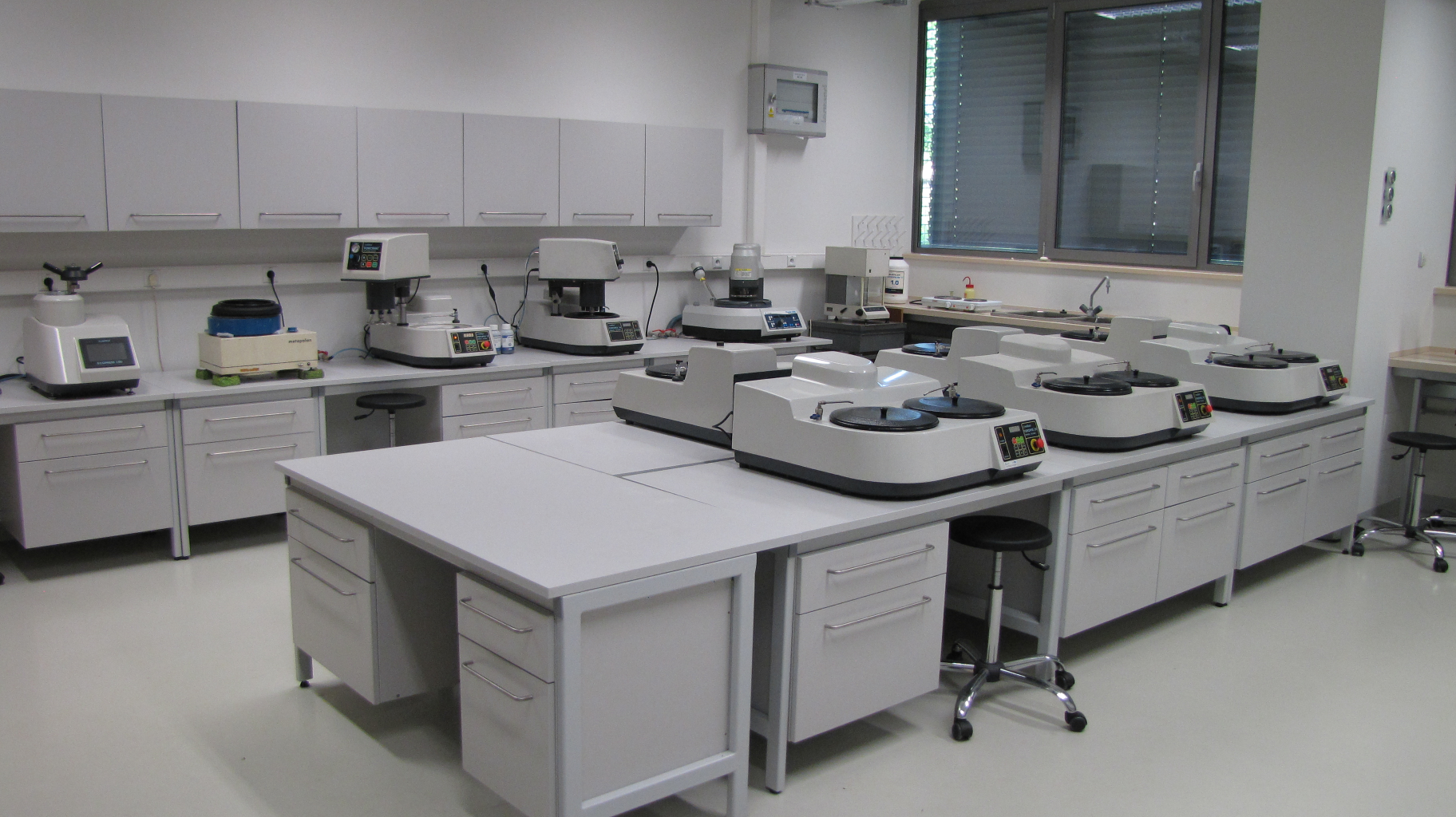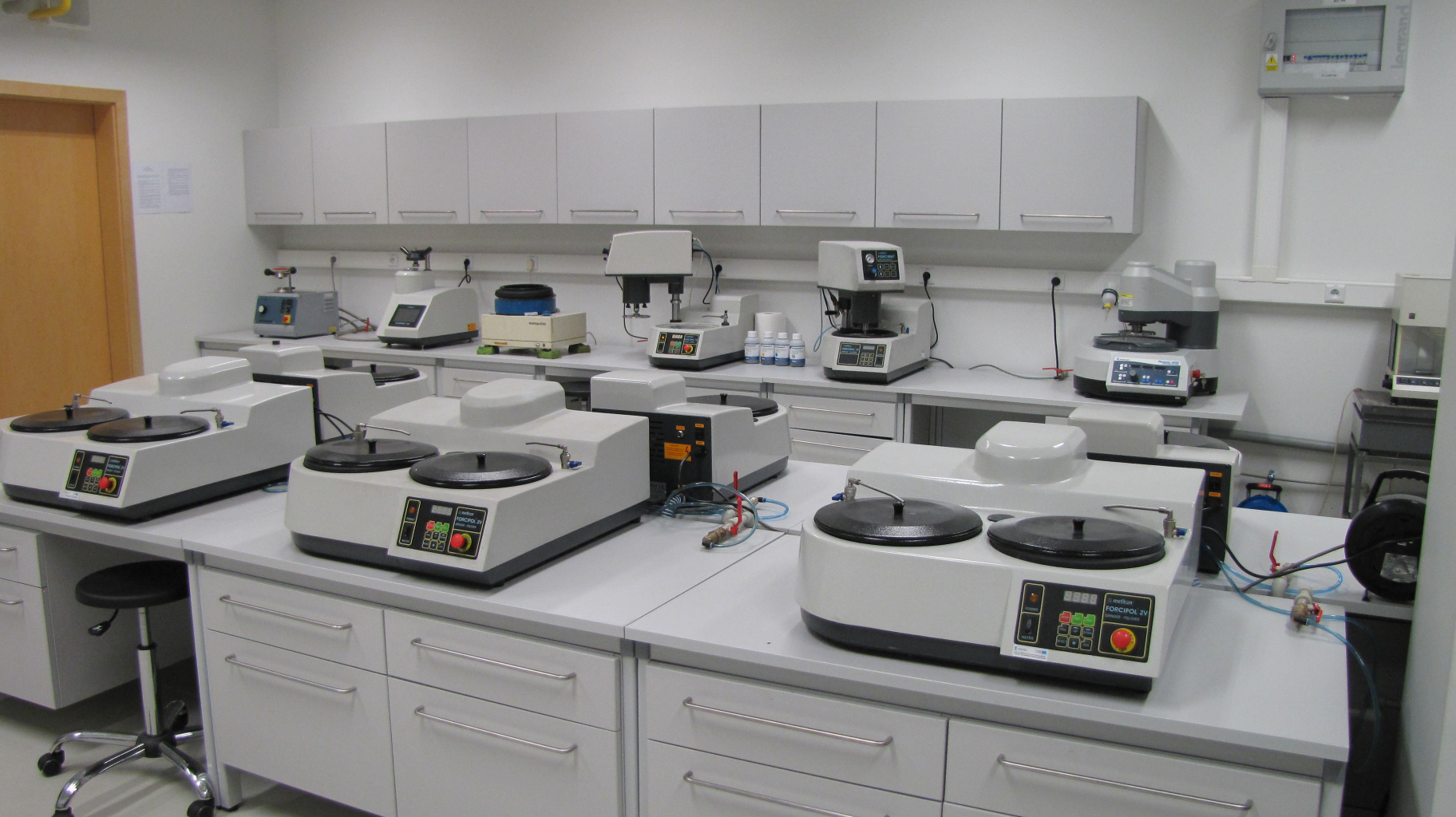





In the metallographic laboratory, samples are prepared for examination using optical microscopes and scanning electron microscopes. The preparation process includes cutting, mounting (mounting), grinding, polishing, and optional chemical etching. This process aims to achieve a perfectly smooth, clean, and undamaged surface, which will allow for precise analysis of the material’s structure under a microscope.
Sample preparation steps:
- Cutting: Cutting the sample from a larger element using a specialized metallographic cutting machine. Coolant must be used during cutting to avoid structural damage, microcracks, or overheating the material.
- Mounting: Mounting the sample in resin (hot in a press or cold in epoxy/acrylic resin). This step facilitates subsequent processing and protects delicate materials or small samples.
- Mechanical grinding and polishing: Smoothing the sample surface, starting with coarser grit sandpaper and then progressing to finer grits. The goal is to remove cutting marks. Polishing: Obtaining a mirror-like surface. This is accomplished using polishing discs and cloth pads and diamond pastes or suspensions to achieve a scratch-free surface.
- Chemical Etching: By applying appropriate chemicals to the polished surface, which reveal the material’s microstructure, creating contrast between different components and phases
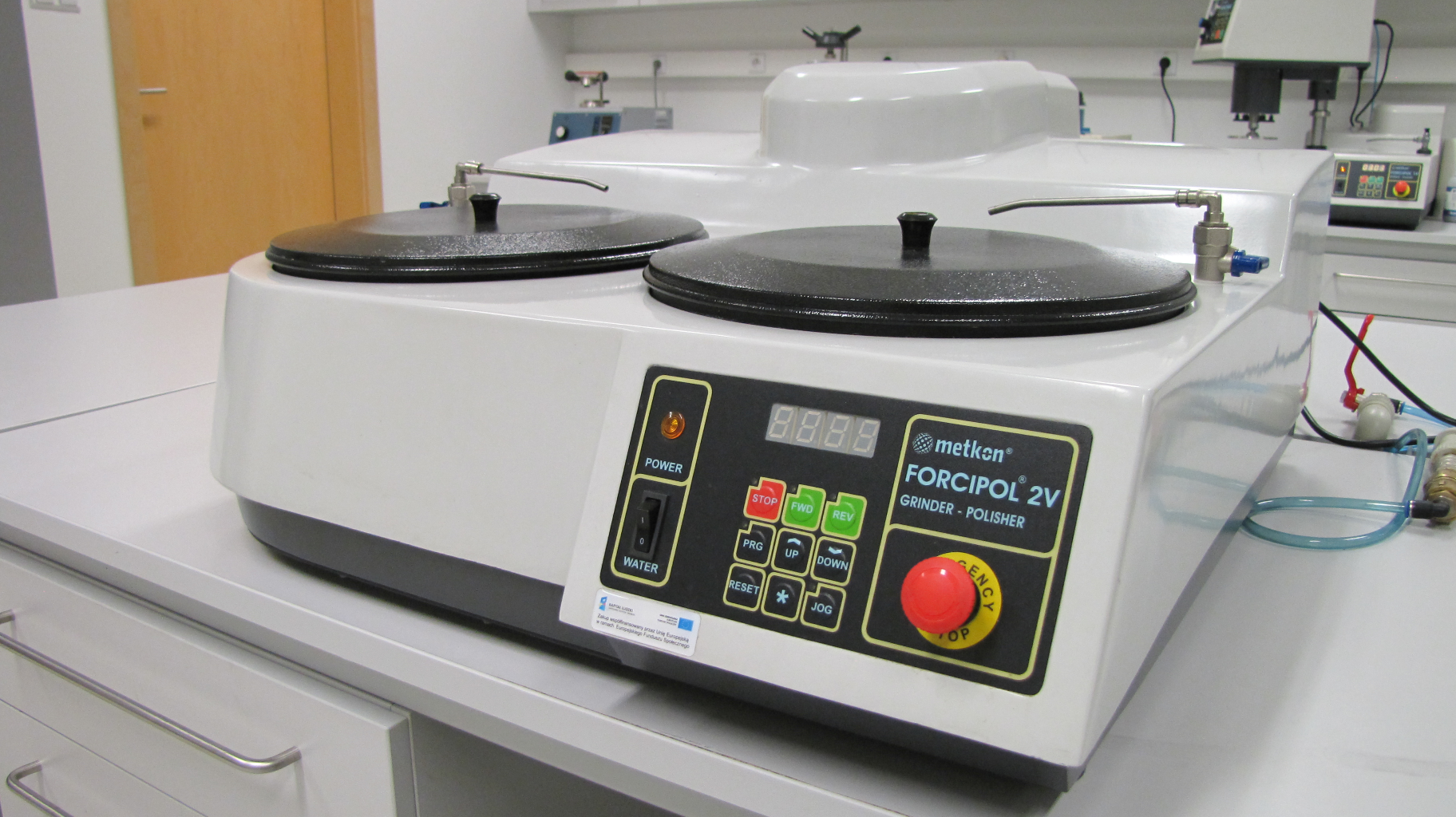
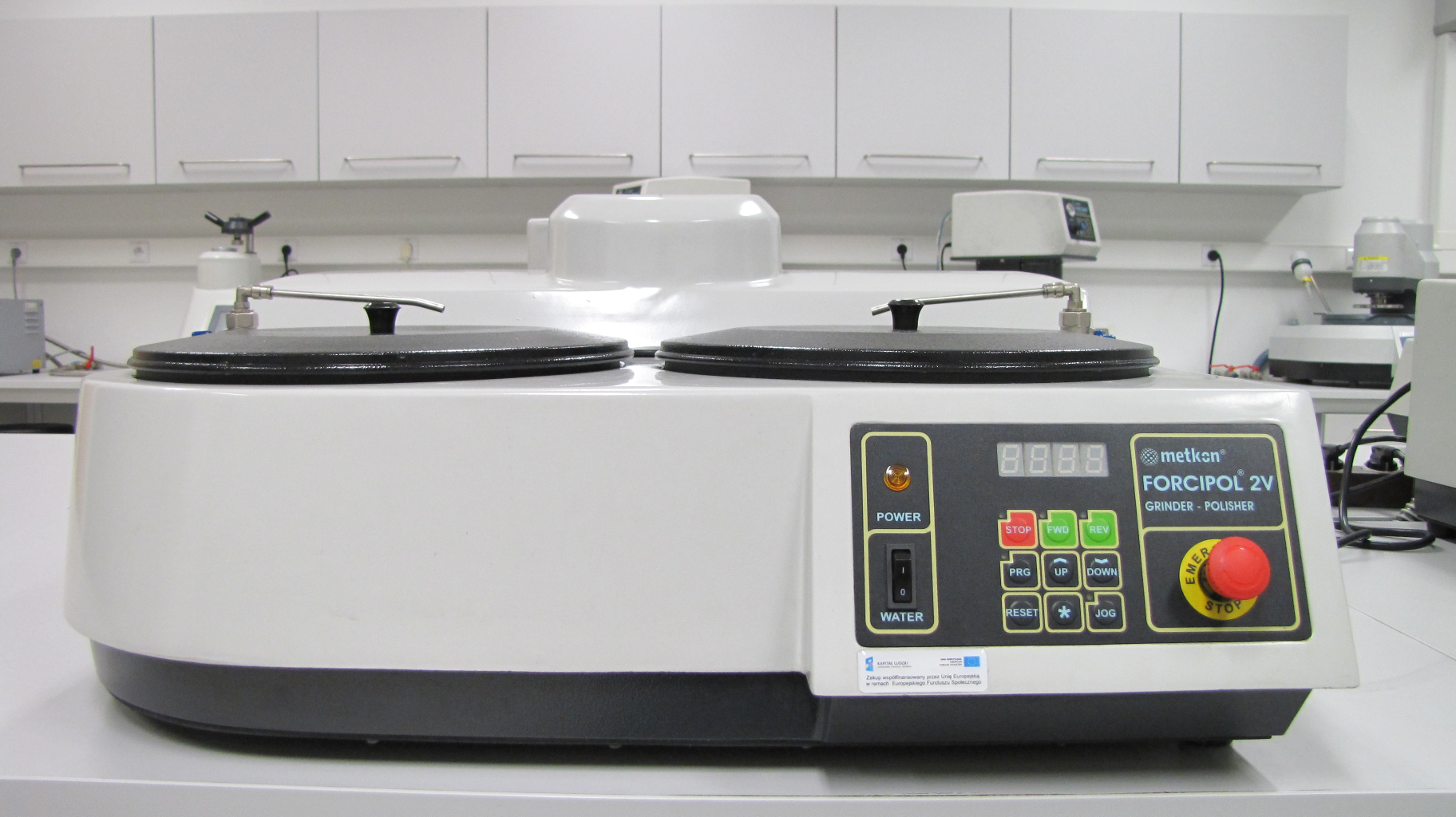
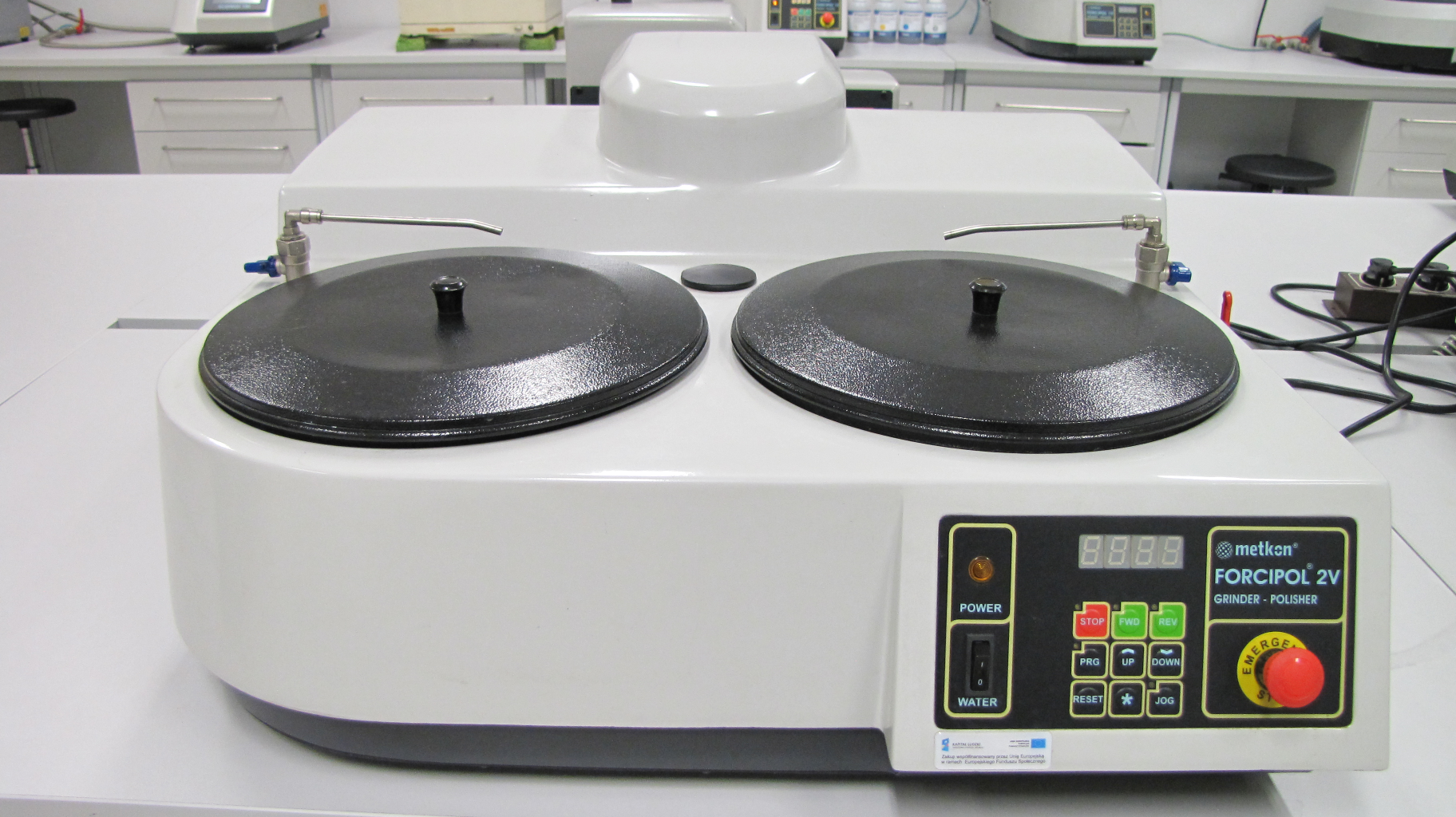
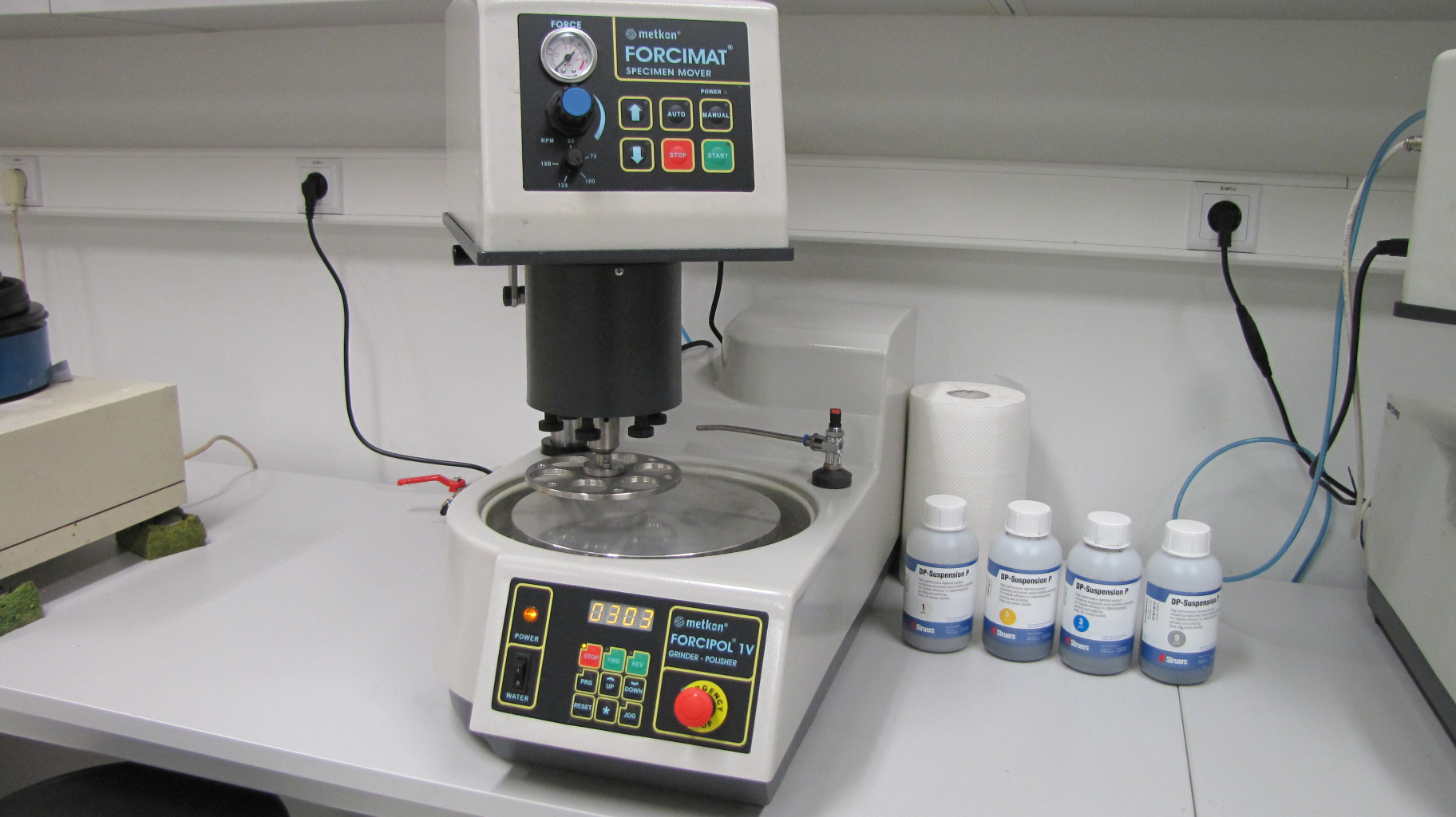
- Metallographic grinding and polishing machines: devices that combine the functions of grinding (using sandpaper of various grits) and polishing (using special cloth and diamond pastes).
- Manual polishers: the operator holds the sample and presses it against a rotating plate. These allow for a great deal of control over the process but require practice to obtain repeatable results.
- Automatic polishers: fully automated devices that can prepare several samples simultaneously. They allow programming of grinding and polishing parameters, ensuring high repeatability and efficiency.
- Dual-disc polishers – devices equipped with two independent discs, which allow for simultaneous preparation of two different stages (e.g., pre-grinding and polishing) or for two operators to work simultaneously. They increase efficiency and flexibility in the laboratory.
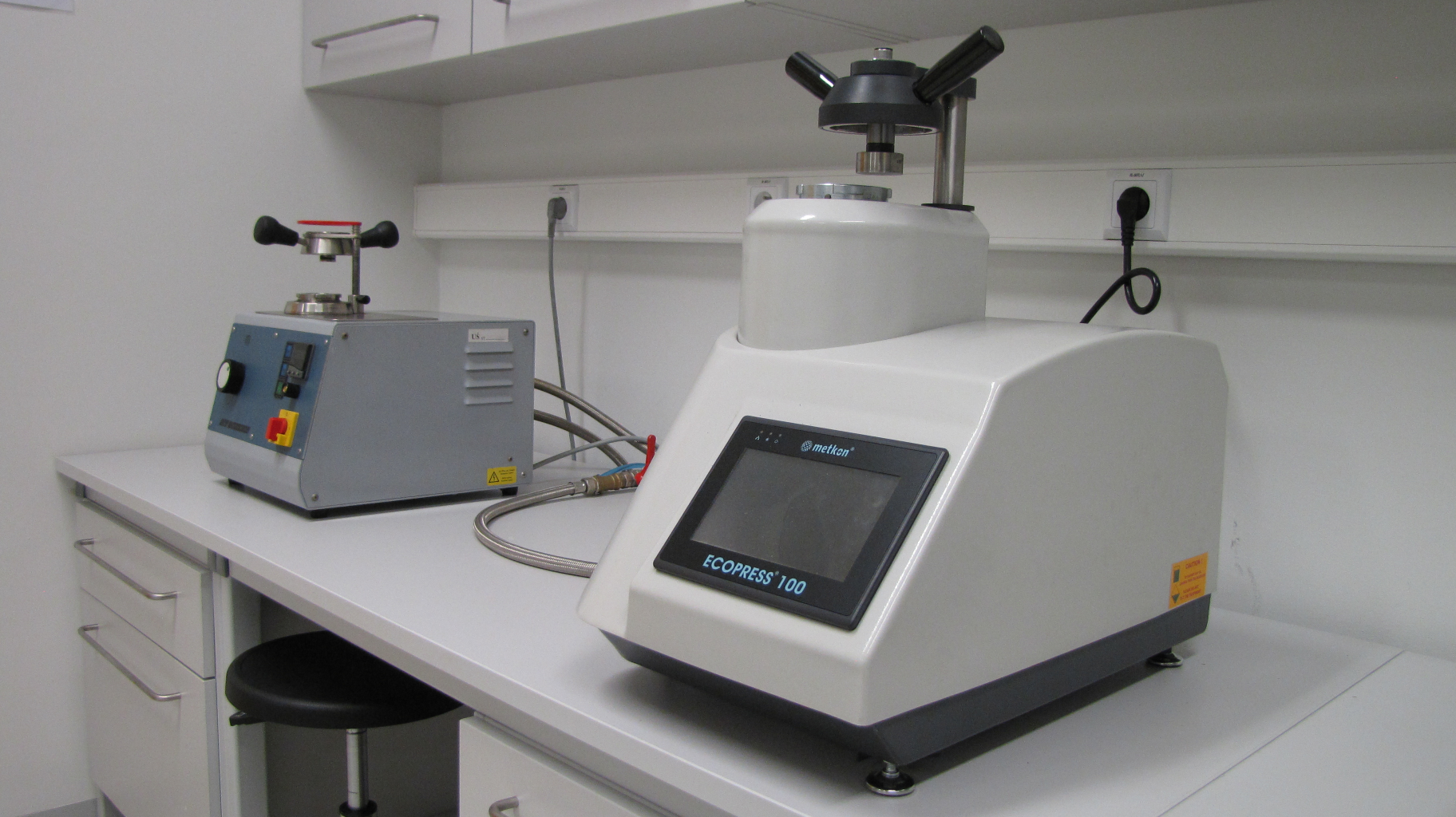
- Mounting presses: Used to mount samples in resin materials, making them easier to grind and polish. Hot mounting is a metallographic process in which material samples are placed in a press under high temperature and pressure to embed them in a special thermosetting resin, creating a durable microscope. This method is used to protect samples, especially metals, from damage during subsequent microscopic analysis, but it is not suitable for heat-sensitive materials
Photo gallery
https://us.edu.pl/instytut/iim/wp-content/uploads/sites/42/obrazy-strony/laboratoria/pmetgr/pmetgr-01.png https://us.edu.pl/instytut/iim/wp-content/uploads/sites/42/obrazy-strony/laboratoria/pmetgr/pmetgr-02.png https://us.edu.pl/instytut/iim/wp-content/uploads/sites/42/obrazy-strony/laboratoria/pmetgr/pmetgr-03.png https://us.edu.pl/instytut/iim/wp-content/uploads/sites/42/obrazy-strony/laboratoria/pmetgr/pmetgr-04.png https://us.edu.pl/instytut/iim/wp-content/uploads/sites/42/obrazy-strony/laboratoria/pmetgr/pmetgr-05.png https://us.edu.pl/instytut/iim/wp-content/uploads/sites/42/obrazy-strony/laboratoria/pmetgr/pmetgr-06.png https://us.edu.pl/instytut/iim/wp-content/uploads/sites/42/obrazy-strony/laboratoria/pmetgr/pmetgr-07.png