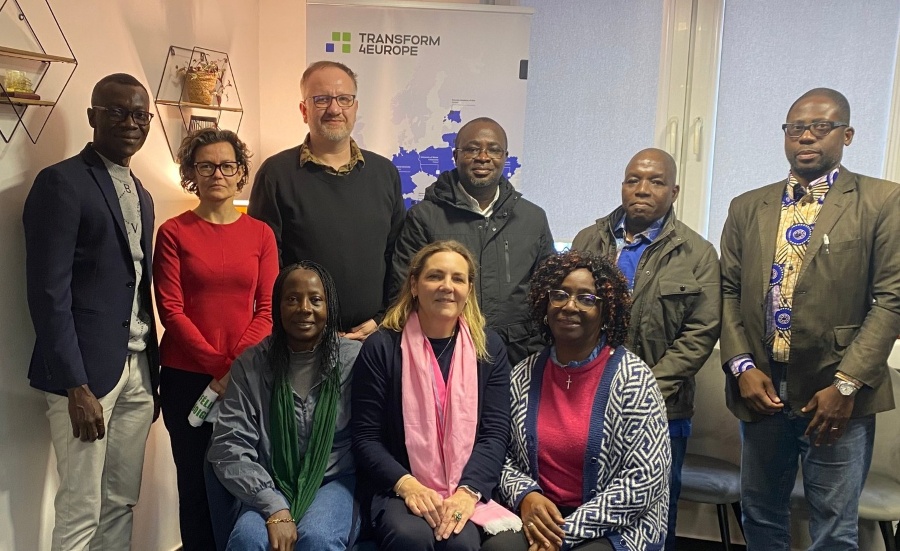





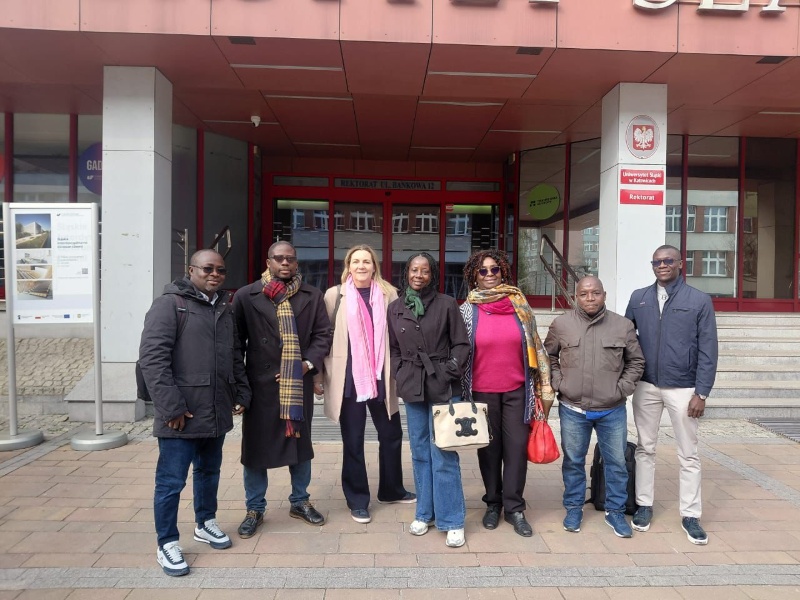
From 16 to 20 March 2026, the University of Silesia hosted a delegation of academic staff from Université Félix Houphouët-Boigny in Abidjan, the largest and most important university in Côte d’Ivoire. The visit marked the next stage in an academic partnership that has been developing for several years. The cooperation is being implemented thanks to the Erasmus+ programme and the commitment of Cecylia Tatoj, PhD, who has been consistently building relations with this university since 2019.
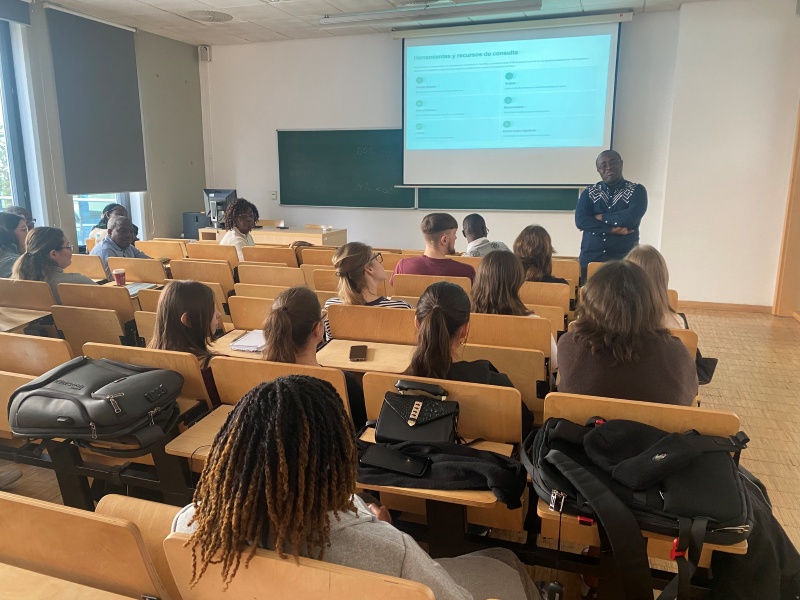
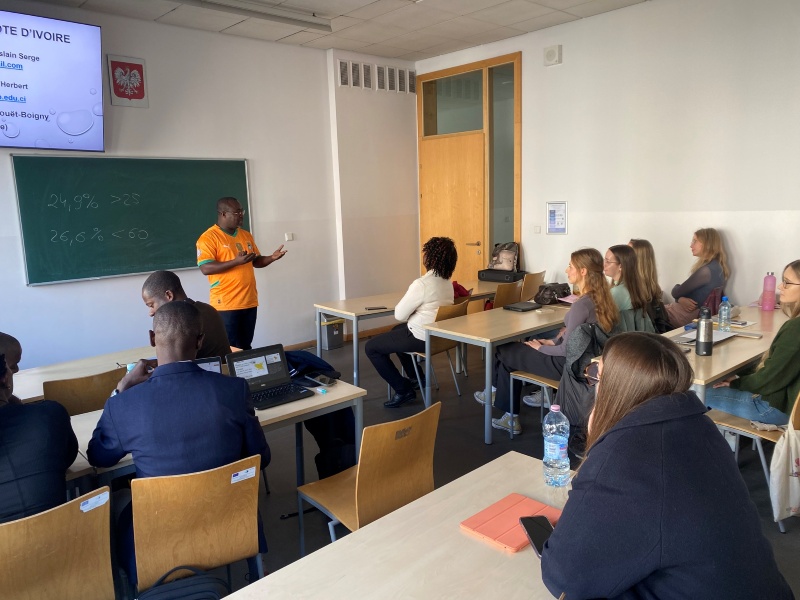
The members of the delegation were welcomed at the Faculty of Humanities of the University of Silesia, where they delivered a series of lectures aimed at students and university staff. As Cecylia Tatoj emphasises, these were ‘extremely inspiring’ meetings – ‘we listened with great interest to stories about their country, its linguistic diversity and culture’.
The delegation included:
- Djoko Luis Stéphane Kouadio, PhD – senior lecturer, Director of the Département d’Études Hispaniques et Lusophones, Erasmus+ and internationalisation coordinator;
- Ozoukouo Léa N’Drin (Nasse Lea N’Drin) – assistant professor of Latin American literature;
- Atta Kouabenan Herbert – research professor in Spanish linguistics;
- Ehui Ghislain Serge N’Guessan, PhD – assistant professor, specialist in Spanish language teaching;
- Kouame N’Guessan Germain, PhD – assistant professor, specialist in Spanish civilisation;
- Yace Adeline Lucie, PhD – senior lecturer, specialist in Spanish civilisation and academic director of the department.
During their visit, the guests met with the University of Silesia authorities, including Prof. Tomasz Pietrzykowski, Vice-Rector for International and Domestic Cooperation, Andrzej Rabsztyn, PhD, DLitt, Assoc. Prof., Degree Programme Team Director: Romance Studies, and Renata Jankowska, PhD, Assoc. Prof., Degree Programme Director: International Studies in Political Science and Diplomacy. Discussions focused on existing activities and the expansion of cooperation into new areas of research and teaching.
The delegation also visited the International Cooperation Development Department, where existing projects and opportunities for further partnership development were discussed. The guests also met at the International Mobility Department with Jarosław Gąsior, Head of the International Exchange Office, who outlined the principles of academic mobility and potential directions for its development.
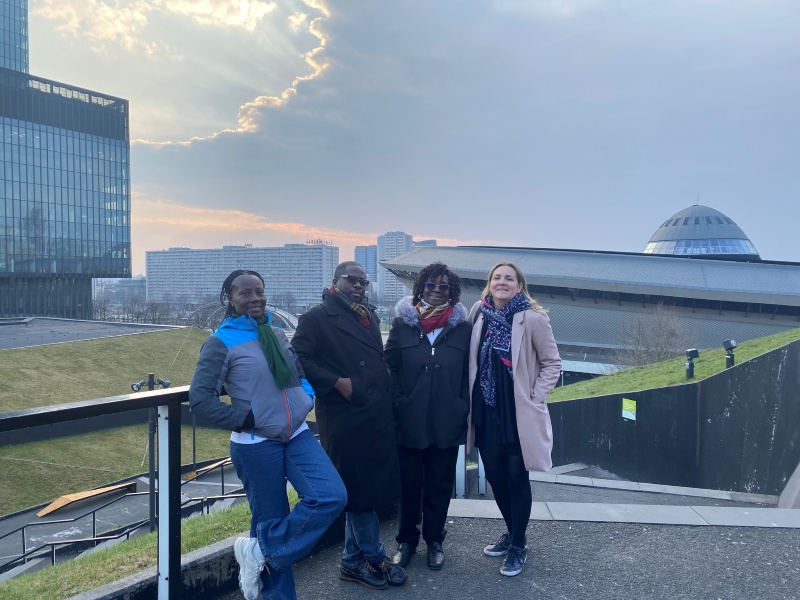
The programme of the visit also included social and cultural activities, such as a joint tour of Katowice and attendance at the ‘Muzyka stąd’ (Music from Here) concert at the Karol Szymanowski Academy of Music. The delegation also visited the Modern Languages Library of the Faculty of Humanities, where – as Cecylia Tatoj points out – the staff welcomed the guests with exceptional kindness and care.
During our discussions, we asked the guests for their thoughts on mobility, cooperation and their stay in Poland.
The biggest challenges for students from Africa wishing to take part in mobility programmes to Europe
Among the most frequently mentioned challenges, the delegation highlighted visa issues. They noted that obtaining a visa itself – for both students and staff – does not pose a major difficulty, even in the absence of a Polish Embassy in Abidjan. The formalities are handled by the Spanish Embassy and proceed relatively smoothly.
A much greater challenge is extending a residence visa, particularly following the recent tightening of regulations, which has resulted in a very low percentage of successful applications. In practice, this leads to a situation where completing a full semester in three months – though theoretically possible – becomes very difficult. The delegation also noted that Polish mobility statistics only take into account stays lasting at least three months, which further complicates the matter.
Benefits of cooperation between the University of Silesia and the Université Félix Houphouët-Boigny
The delegation highlighted the high standard of education at the University of Silesia and the wide range of degree programmes and fields of study, which could form the basis for further joint projects. It is also significant that the University of Silesia is a member of the Transform4Europe Alliance, which opens up opportunities to participate in international initiatives and strengthens the potential for cooperation.
Plans for further visits to Poland
The delegation expressed a desire to continue the cooperation – a longer stay is planned for next year, during which the guests would like to deliver a series of lectures and classes for students at the University of Silesia.
The most memorable impressions from the visit to Katowice
The guests repeatedly emphasised that Katowice is an exceptionally clean city – they even asked how many times a week we clean the streets. They also noted the friendliness and warmth of the people they met, both at the university and outside it. There was also a light-hearted remark about the Polish winter: ‘It has its charm, but I don’t think it will be our favourite season’.
Cooperation with the Université Félix Houphouët-Boigny is developing rapidly. In recent years, the University of Silesia has hosted numerous groups of doctoral students and researchers from Abidjan, and further exchanges are already being planned. As Cecylia Tatoj sums up: ‘It is with gratitude that I bid farewell to my guests, for the time we spent together, the inspiring conversations and meetings that will remain in our memories for a long time. I am delighted that our cooperation is developing so beautifully, and I am already looking forward to its next stages’
Materials of the University of Silesia