




LECTURERS
BEYOND BARRIERS
the Role of Social Sciences in building Accessibility
08.06.2026 – 12.06 2026
Salomėja Karasevičiūtė
Kauno Kolegija Higher Education Institution, Lithuania
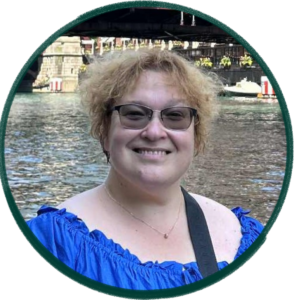
Łukasz Łata
HPI d-school as a part of University of Potsdam, Germany
He holds a bachelor’s degree in Management and Information Systems as well as an MBA from the University of Cape Town. He has spent most of his career in the private sector, supporting companies in automating business processes across industries such as telecommunications, banking, insurance, and e-commerce.
While working on transformation projects (system implementations, digital transformation, and innovation methodologies), he recognized the enormous importance of individual and organizational culture. He is convinced that no transformation can succeed if the focus is solely on processes and technology while neglecting people and organizational culture. This belief inspired him to further develop in this field.
Łukasz is a certified Integral Coach. Since 2022, he has been collaborating with d-school Afrika at the Hasso Plattner Institute as a Design Thinking Coach, and since February 2024 he has served as Program Lead at the Hasso Plattner Institute part of University Potsdam, supporting students and organizations in the areas of innovation and Design Thinking methodology.
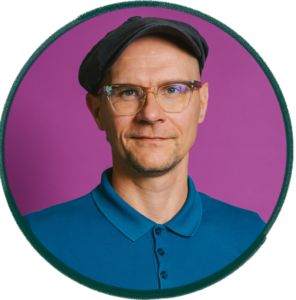
Tomasz Kasprzak
University of Silesia in Katowice, Poland
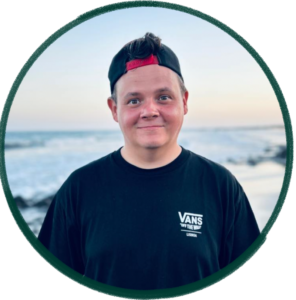
Magdalena Christ
University of Silesia in Katowice, Poland
Recipient of the Transform4Europe Innovative Teaching Award 2023. Coach of the student team from the University of Silesia in Katowice, which won first place twice (2024 and 2025) at the Odyssey of the Mind World Finals (Iowa State University, Ames, and Michigan State University, East Lansing, USA). Winner, together with her team, of first place and the Audience Award in the Spin Business Accelerator program. Co-supervisor of the student research group “Włącznik”. Participant in universal design training courses under the project “UNIWERS-US: Staff of the University of Silesia for Universal Design”. Mentor in the project “DUO – University of Silesia as an Accessible, Universal, and Open University” and in the student competition “Invent the Future: Katowice – City of Science of the Future”.
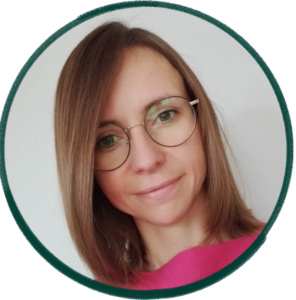
Zuzanna Neuve-Église
University of Silesia in Katowice, Poland
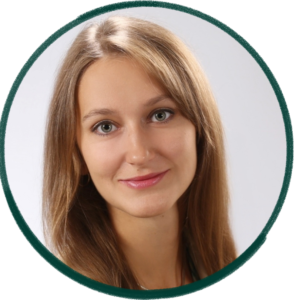
Anna Nawrot
University of Silesia in Katowice, Poland
An expert in alternative communication methods, and long-time deafblind assistant. Ms. Nawrot has supported deafblind national and international community organizing and advocacy and has monitored UN CRPD implementation in Poland.
An alumna of the U.S. State Department’s International Visitor Leadership Program, she served as a facilitator for the Open World Program (U.S. Congressional Office for International Leadership) in the area of disability inclusion.
She conducts doctoral research on deafblind education.
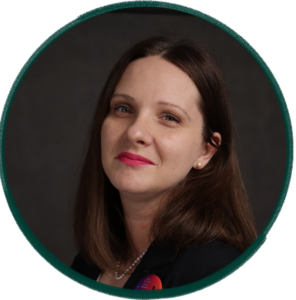
Grzegorz Gawron
University of Silesia in Katowice, Poland
Specialist in Universal Design/Design for All and Universal Design for Learning; Coordinator of the Universal Design Centre at the University of Silesia. Mentor and Leader of the Expert Team in the DUO I and DUO II projects.
Visiting lecturer at Universitat de València (Spain), Universidade do Porto (Portugal), Universidade de Lisboa (Portugal), Kirikkale University (Turkey), Comenius University in Bratislava (Slovakia), and Abo Akademi University (Finland).
Principal investigator and participant in research projects (including ISABEL – Horizon Project), as well as organiser and speaker at national and international conferences (including in Japan, the USA, Canada, Brazil, Greece, the United Kingdom, and Italy).
Author and consultant of regional and local strategic documents, mainly in the field of development and social policy. Expert for the National Centre for Research and Development (NCBR), Foundation for Polish Science (FNP), National Agency for Academic Exchange (NAVA), Prime Minister’s Office, and the Ministry of Family and Social Policy. Consultant on ageing for the World Health Organization (WHO) and member of the international research team at the WHO – Center for Health Development in Kobe.