





Pizza Meeting – Nauka, Dyskusja i Pizza!
Zapraszamy na Pizza Meeting – wyjątkowe spotkania seminaryjne, które łączą naukę z luźną atmosferą i smakiem pizzy! To doskonała okazja, aby:
- Podzielić się efektami swojej pracy naukowej – niezależnie od etapu badań, dziedziny czy doświadczenia. Twoje pomysły mogą zainspirować innych!
- Nawiązać dyskusję – spotkaj się z kolegami i koleżankami z wydziału, wymieńcie się spostrzeżeniami, zadawajcie pytania i poszerzajcie swoje horyzonty.
- Poznać się wzajemnie – budujmy wspólnotę naukową naszego wydziału w przyjaznej atmosferze.
Koordynator projektu/kontakt: miroslaw.chorazewski@us.edu.pl
Spotkania są otwarte dla każdego!
Aby umilić czas i pobudzić kreatywność, każde spotkanie zakończymy wspólnym poczęstunkiem – pizzą! A jeżeli nie możesz do nas przyjechać, bądź z nami online na kanale YouTube Uniwersytetu Śląskiego w Katowicach.
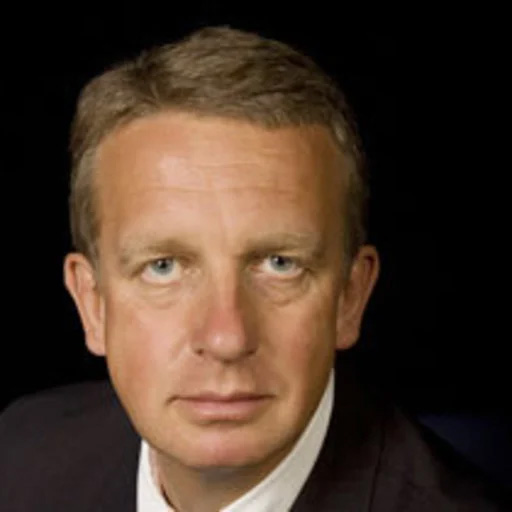
Prof. Jaroslaw Majewski, Ph.D.
Department of Chemical & Biological Engineering at the University of New Mexico, Albuquerque, US; Visiting Scientist at Los Alamos National Laboratory, Los Alamos, NM; Affiliated Professor at the University of Warsaw, Poland.
Bio: Jaroslaw Majewski, Ph. D., graduated from the Weizmann Institute of Science in Israel. Most of his scientific career (1995-2019) has been spent at Los Alamos National Laboratory (LANL) where, over 24 years, he built several successful scientific programs. His interests span from bio-interfaces and soft-condensed systems to hard-condensed hetero-structures.
Until 2017 served as an adjunct professor at the Department of Chemical Engineering, University of California, Davis. Currently, he is a Research Professor in the Department of Chemical & Biological Engineering at the University of New Mexico, Albuquerque and Affiliated Professor at the University of Warsaw, Poland.
He published 202 peer-reviewed papers (h-factor 53, Jaroslaw Majewski – Google Scholar) and gave an app. 200+ invited talks and over 200 other presentations. He is an elected fellow of the American Physical Society and the Neutron Scattering Society of America. He is a recipient of individual LANL’s Director Distinguished Performance Award. He received several LANL Mentor and Defense Programs Awards of Excellence. Please see his full Resume for details.
From 2019 until March 2025, he served as a permanent Program Director in the Molecular and Cellular Biosciences at the National Science Foundation (NSF). He was responsible for the annual budget of app. 30-40 M$ per year. Currently he is on a sabbatical leave in the Department of Chemistry, University of Warsaw.
At NSF he served in several programs beyond core Molecular Biophysics solicitation. For example, NSF funded: the Center for High Energy X-Ray Sciences (CHEXS) at Cornell High Energy Synchrotron Source (CHESS), at Cornell University; the Compact X-ray Free Electron Laser (CXFEL) at Arizona State University; the Center for High Resolution Neutron Scattering (CHRNS) at NIST Center for Neutron Research (NCNR) at the National Institute for Standards and Technology (NIST); ChemMatCARS beamline at the Advanced Photon Source at the Argonne National Laboratory; NSF-private partnership with the Simons Foundation to create the National Institute for Theory and Mathematics in Biology, and others.
Neutron Scattering for Investigating Bio- and Soft Matter Systems
Neutron scattering techniques offer uniquely powerful, non‑perturbative, and isotopically‑sensitive means to investigate biological and soft‑matter interfaces. In this presentation, Dr. Jarosław Majewski will first introduce the core methodology behind neutron scattering, with emphasis on their ability to probe surface and interfacial structures under diverse environmental conditions—such as variations in pH, temperature, and shear flow. He will then present selected case studies drawn from his recent work on biol- and soft matter related systems: (i) model lipid membranes, (ii) interactions between lipid membranes and proteins, and (iii) polymeric films. These examples will highlight how surface‑scattering methods can reveal structural organization, dynamic responses, and subtle interfacial changes in biologically and soft matter relevant systems. Through these cases, the talk aims to illustrate the versatility of neutron scattering in characterizing bio‑interfaces and their responses to external stimuli, ultimately underscoring their importance as tools in biophysical and soft‑matter research.